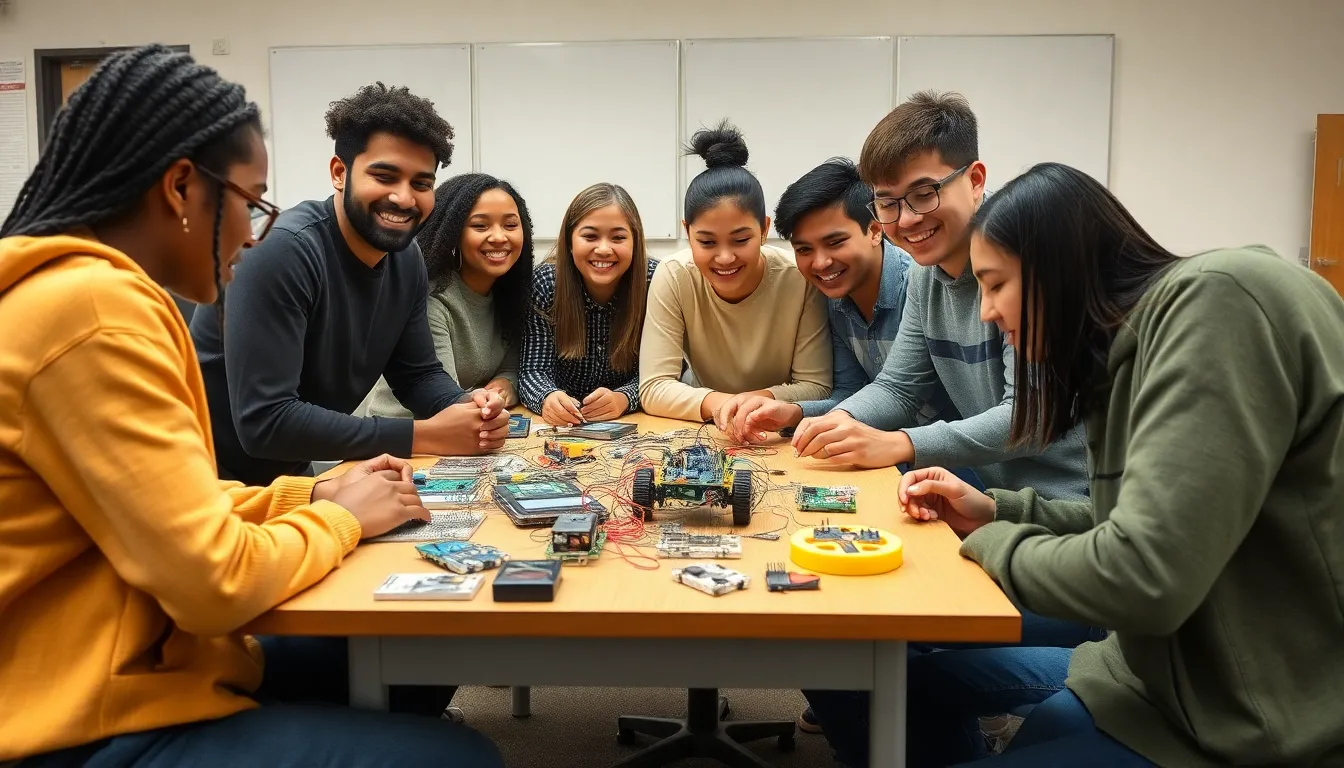
Robotics projects are the perfect blend of creativity and engineering, where imagination meets innovation. Whether it’s building a robot that can dance or one that can fetch snacks from the kitchen, the possibilities are endless. Who wouldn’t want a mechanical sidekick to help with chores or entertain during a dull afternoon?
Robotics projects blend creativity with engineering, showcasing innovative applications in various sectors. Engaging in these projects opens doors to understanding technology’s role and potential.
Importance Of Robotics In Modern Technology
Robotics plays a crucial role in advancing modern technology. Automation enhances production efficiency across industries, from manufacturing to healthcare. Robots manage repetitive tasks, allowing humans to focus on more complex activities. In addition, robotics improves accuracy in various applications such as surgery and precision agriculture. Education also benefits as robotics fosters STEM interest among students. In combination, these factors underscore robotics’ significance in shaping a more efficient future.
Types Of Robotics Projects
Numerous types of robotics projects encourage enthusiasts to explore diverse applications. Hobbyist projects often include autonomous vehicles designed for navigation and obstacle avoidance. Educational kits introduce basic programming and building techniques for beginners. Industrial robots streamline assembly lines, improving productivity in manufacturing environments. In healthcare, robots assist in rehabilitation and patient monitoring. Other projects focus on personal assistance, showcasing robots that handle household chores. Collectively, these examples illuminate the wide-ranging potential of robotics across different fields.
Popular Robotics Projects For Beginners
Beginners can engage in exciting robotics projects that foster creativity and technical skills. From DIY kits to educational initiatives, there’s a wide range of opportunities available.
DIY Robotics Kits
DIY robotics kits offer a hands-on approach for those new to robotics. These kits include essential components like motors, sensors, and microcontrollers. Popular options include Arduino starter kits and Raspberry Pi bundles. Instructions often guide users in building simple robots like line-followers or remote-controlled vehicles. Assembling these kits helps beginners grasp basic programming concepts and electronics.
Educational Robotics Projects
Educational robotics projects allow learners to explore robotics in structured environments. Schools and community programs often use platforms like Lego Mindstorms and VEX Robotics. These projects typically emphasize collaboration, enabling teams to work on designing and coding robots to accomplish tasks. Participating in competitions can further enhance skills while fostering a deeper understanding of engineering principles. Engaging in these projects encourages critical thinking and problem-solving among participants.
Advanced Robotics Projects
Advanced robotics projects push the boundaries of technology and creativity. They offer innovative solutions that revolutionize how tasks are performed in various industries.
Autonomous Robots
Autonomous robots exhibit remarkable capabilities, operating independently to perform tasks without human intervention. Typically, they utilize sophisticated sensors and artificial intelligence algorithms to navigate environments. Examples include drones that conduct search and rescue missions and autonomous vehicles that provide transportation services. These robots gather data from their surroundings, make real-time decisions, and adapt to changing conditions. Industries are exploring their applications in logistics, agriculture, and surveillance, significantly enhancing operational efficiency.
Industrial Robotics Applications
Industrial robotics applications streamline production processes in various sectors. Many factories employ robotic arms for tasks such as welding, assembly, and painting, leading to higher precision and reduced labor costs. Automotive manufacturing relies heavily on these robots, improving throughput and quality. Additionally, collaborative robots, or cobots, work alongside human operators, enhancing workflows without compromising safety. Industries are also integrating robotics for material handling and packaging, allowing for faster and more efficient operations. Enhanced automation in these areas reduces human error and contributes to overall productivity in manufacturing.
Challenges In Robotics Projects
Robotics projects face several significant challenges that can hinder success. These obstacles often require innovative problem-solving strategies.
Technical Challenges
Technical challenges dominate robotics projects. Complexities arise from integrating hardware and software systems. Ensuring components communicate effectively poses considerable difficulty. Designing robots that can process data efficiently often demands specialized knowledge. Moreover, maintaining system reliability under various conditions remains critical. Developing algorithms for navigation and response without human intervention adds another layer of complexity. The need for continuous testing throughout the project lifecycle ensures robust performance.
Funding And Resource Limitations
Funding and resource limitations frequently restrict robotics projects. Budget constraints can impede access to high-quality materials and tools. Acquiring advanced sensors or microcontrollers may not always be feasible within strict financial guidelines. Additionally, securing sufficient technical support or expertise often proves challenging. Limited resources impact the ability to conduct comprehensive testing and refinement processes. Collaborations with educational institutions or industry partners might help fill these gaps, minimizing the risk of failure due to financial limitations.
Future Trends In Robotics Projects
Robotics is evolving rapidly, with innovations shaping how projects develop and integrate into various sectors.
Innovations And Emerging Technologies
Artificial Intelligence drives significant advancements in robotics. Neural networks enhance machine learning, allowing robots to adapt and perform tasks autonomously. Drones continue to become more sophisticated, featuring improved navigation and obstacle avoidance capabilities. Additionally, soft robotics utilizes flexible materials, enabling robots to interact safely with humans and navigate unpredictable environments. These emerging technologies not only enrich the functionality of robots but also broaden their application spectrum, making them integral in healthcare and environmental monitoring.
Potential Impact On Society
Increased automation has potential to reshape workplaces, improving efficiency while minimizing human error. Robotics enhances precision in surgeries, leading to better patient outcomes. Moreover, collaborative robots support human workers, creating safer and more productive environments. As robotics projects expand, societal roles may shift, prompting discussions about job displacement and the need for reskilling. Individuals can expect improved quality of life as household and service robots handle monotonous tasks, allowing people to engage more in creative and fulfilling activities.
Conclusion
Robotics projects represent a thrilling blend of innovation and creativity that holds immense potential for the future. As technology advances, these projects not only enhance productivity across various industries but also inspire a new generation of engineers and creators. With resources like DIY kits and educational platforms, anyone can dive into the world of robotics, fostering essential skills and collaboration.
The challenges faced in robotics continue to drive improvements and partnerships, paving the way for groundbreaking solutions. As artificial intelligence and automation evolve, the impact of robotics on daily life will only increase, allowing people to focus on more meaningful pursuits. Embracing this field means stepping into a future filled with possibilities that can transform both personal and professional landscapes.