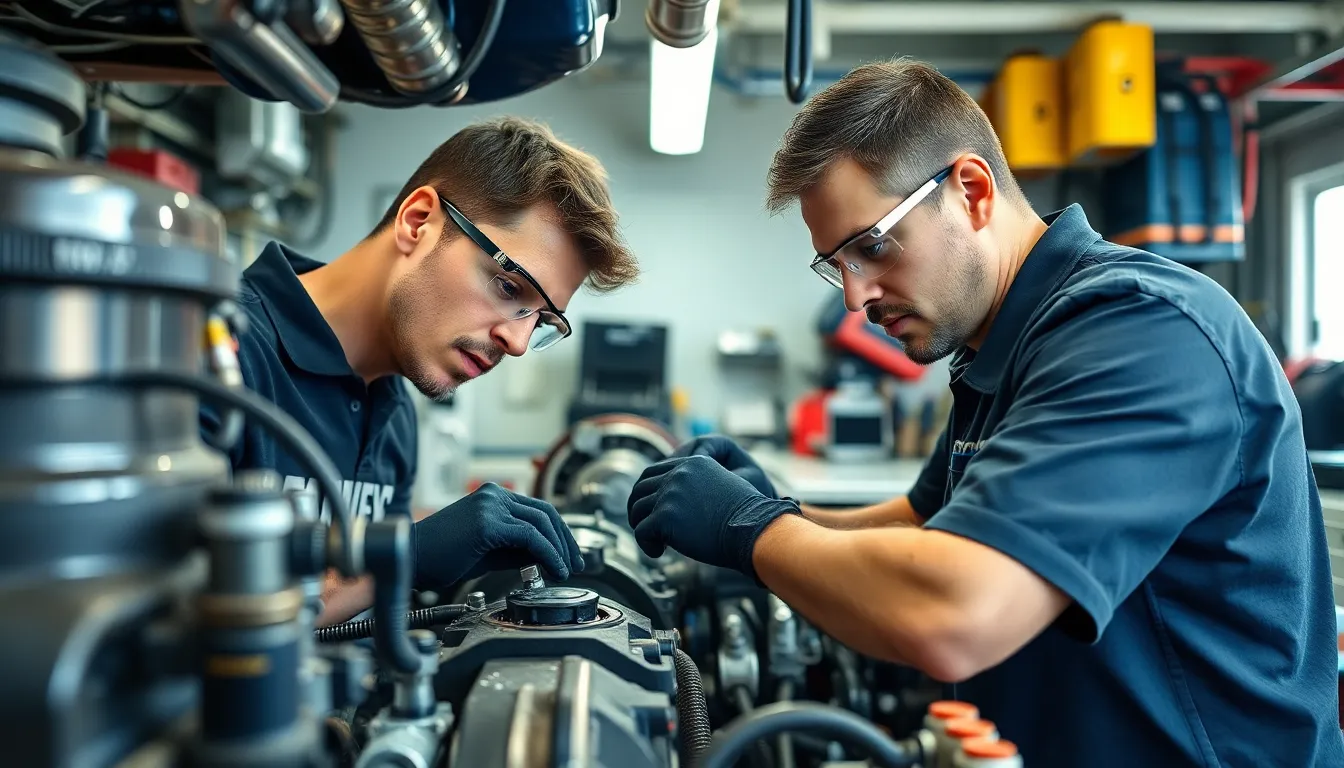
When the sun’s shining and the waves are calling, the last thing anyone wants is a boat that won’t start. Enter the world of boat mechanics, where skilled hands and a bit of nautical know-how can turn a floating dream into a reality. Whether it’s a stubborn engine or a pesky leak, boat mechanics are the unsung heroes who keep your maritime adventures afloat.
Imagine this: you’re ready to set sail, but instead of the open sea, you’re stuck in your driveway, staring at a boat that looks more like a floating paperweight. Fear not! With the right boat mechanic in your corner, those watery woes can be transformed into smooth sailing. Dive into the essentials of boat mechanics and discover how these experts can save your next voyage from becoming a comedy of errors.
Boat mechanics play a crucial role in maintaining and repairing various marine vessels. Understanding the basics contributes significantly to a smooth and enjoyable boating experience.
Importance of Understanding Boat Mechanics
Grasping the basics of boat mechanics empowers individuals to troubleshoot issues effectively. Knowing how engines operate, identifying potential leaks, and recognizing electrical problems enhances safety during maritime adventures. Familiarity with boat systems helps boaters avoid costly repairs and downtime. Seamless communication with professionals becomes easier when boat owners understand specific terminology and concepts. Recognizing the importance of regular maintenance fosters a proactive approach, preventing minor issues from escalating into major problems.
Common Types of Boat Mechanics
Different types of boat mechanics specialize in various systems. Engine mechanics focus on diagnosing and repairing engine issues, ensuring optimal performance during voyages. Electrical mechanics deal with wiring, batteries, and electronic navigation systems, keeping boats operational and safe. Hull mechanics concentrate on maintaining the structure and integrity of the vessel, addressing leaks and structural damages. Additionally, marine upholstery experts specialize in restoring and outfitting inner and outer spaces, enhancing comfort and aesthetics. Understanding these specializations allows boat owners to seek the right expertise for their specific needs.
Key Components of Boat Mechanics
Understanding the key components of boat mechanics helps ensure smooth sailing experiences. These components play a crucial role in a vessel’s overall performance and safety.
Engine Systems
Engine systems represent the heart of the boat. They include inboard and outboard engines, propulsion systems, and fuel management components. Proper maintenance of engine systems prevents issues such as overheating and fuel leaks. Regular checks on oil levels and filter cleanliness keep the engine running efficiently. Skilled mechanics can troubleshoot complicated problems, ensuring the engine operates at peak performance.
Electrical Systems
Electrical systems power essential components like navigation equipment, lights, and communication devices. Batteries, wiring, and circuit breakers make up the backbone of these systems. Attention to connections and battery health is vital for reliability on the water. When electrical failures occur, diagnosing the issue promptly minimizes disruptions. Understanding the electrical layout enables boat owners to communicate effectively with professionals, leading to timely repairs.
Hull and Structure
The hull and structure provide stability and durability to the boat. Key elements include the hull material, transom, and deck fittings. Regular inspections for cracks, blisters, or damages are crucial for maintaining structural integrity. Cleaning and sealing the hull assist in preventing water intrusion and leaks. Mechanics specializing in hull repairs can provide invaluable support when issues arise, ensuring safety and longevity.
Maintenance and Repair Techniques
Regular maintenance and repair are vital for ensuring optimal performance in boating. Implementing consistent upkeep prevents minor issues from turning into costly repairs.
Regular Maintenance Practices
Performing regular inspections enhances the longevity of boat components. Check engine fluids each month to ensure optimal performance. Inspect electrical systems for corrosion and secure battery connections frequently. Cleaning the hull regularly removes contaminants that can affect speed and fuel efficiency. Additionally, lubricating moving parts decreases wear and improves functionality. Following these practices fosters a safe and enjoyable boating experience.
Troubleshooting Common Issues
Identifying common issues can save time and money. Notice engine stalling? Inspect fuel lines for blockages and check the fuel filter for any debris. If electrical systems act up, evaluate connections and ensure the battery is charged. For hull leaks, examine the seams and fittings carefully. Addressing these problems promptly enhances safety on the water. Understanding these troubleshooting techniques empowers boat owners to handle minor repairs confidently.
Advancements in Boat Mechanics
Innovations and environmental awareness shape modern boat mechanics. Technological advancements enhance efficiency and functionality.
Innovations in Technology
Electronics play a vital role in contemporary boats. Navigation systems have evolved with GPS integration, improving precision in course plotting. Engine management systems now utilize computerized controls for better fuel efficiency and performance. Additionally, hybrid propulsion systems have gained popularity, offering reduced emissions and quieter operation. Smart technology also allows for remote diagnostics and monitoring, enabling owners to track parameters like engine health in real time. Tools like mobile apps facilitate easier communication between boaters and mechanics, streamlining maintenance schedules and service reminders.
Environmental Considerations
Environmental regulations increasingly influence boat mechanics. Manufacturers prioritize eco-friendly materials for construction and repair. Innovations include catalytic converters that lessen emissions from gasoline and diesel engines. Solar power systems have become a popular choice, harnessing renewable energy to power onboard electronics. Accepting waste management practices assists in minimizing pollution while promoting sustainable boating options. Further, hydrodynamic designs improve fuel efficiency, reducing the carbon footprint of marine vessels significantly. Adopting these practices shows a commitment to preserving waterways for future generations.
Conclusion
Understanding boat mechanics is vital for anyone who wants to enjoy their time on the water. By grasping the essentials of maintenance and repair, boat owners can prevent small issues from escalating into costly problems. This knowledge not only enhances safety but also fosters effective communication with mechanics when professional help is needed.
Regular upkeep and awareness of advancements in technology can significantly improve a vessel’s performance and sustainability. As the boating industry continues to evolve, staying informed about the latest practices ensures a smooth sailing experience for all. Embracing these principles allows boaters to fully enjoy their maritime adventures while contributing to the preservation of our waterways.