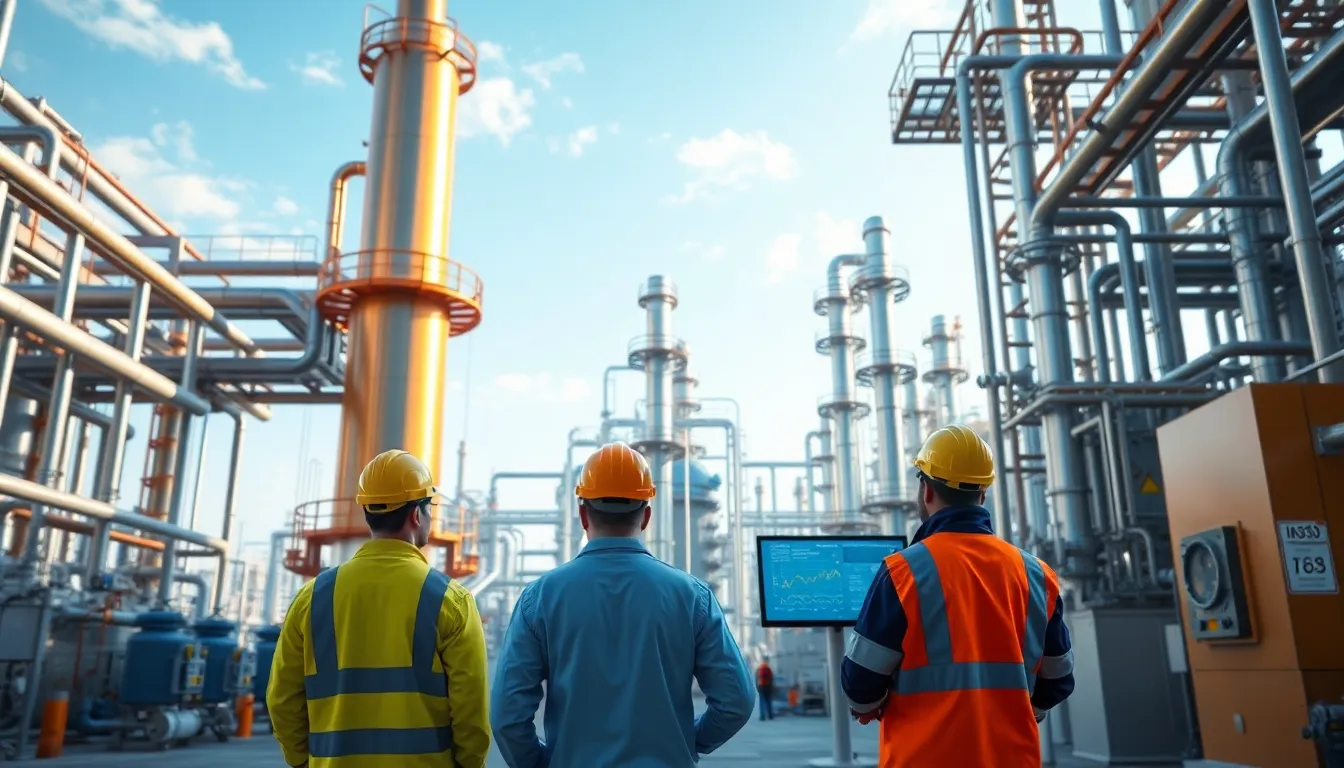
In a world where technology reigns supreme, the hi-tech refinery stands as a beacon of innovation and efficiency. Gone are the days of clunky machinery and inefficiency. Today’s refineries are sleek, smart, and packed with cutting-edge technology that transforms crude oil into valuable products faster than you can say “fossil fuels.”
Hi tech refineries represent the pinnacle of innovation in the oil industry. These facilities incorporate advanced technologies that streamline operations and maximize efficiency. For instance, using automation and artificial intelligence enhances monitoring and control systems.
Enhanced data analytics aids in optimizing production processes and reducing operational costs. The integration of renewable energy sources further exemplifies their commitment to sustainability. By utilizing equipment with lower emissions, refineries significantly reduce their environmental footprint.
Laboratory analysis plays a critical role in maintaining quality standards. Real-time testing ensures consistent quality of the final products. Furthermore, advanced processing units enable higher yields from crude oil inputs.
In addition, remote monitoring capabilities allow operators to manage processes from anywhere, boosting overall flexibility. Automated safety systems improve worker safety while lowering the risk of accidents. Refineries can implement predictive maintenance to avoid equipment failures, thereby increasing uptime.
As a result, hi tech refineries not only produce fuels but also generate valuable by-products like petrochemicals and lubricants. Their versatility meets diverse market demands while ensuring compliance with regulations and standards.
These innovations set the stage for future developments in energy and materials processing, establishing hi tech refineries as leaders in the transition toward a more sustainable energy landscape.
Key Technologies Used in Hi Tech Refineries
Hi-tech refineries utilize a range of advanced technologies that enhance efficiency and production capabilities. Continuous innovation in these technologies helps shape the future of the oil industry.
Automation and Control Systems
Automation plays a critical role in hi-tech refineries. It streamlines operational workflows, reducing manual intervention. Control systems enable accurate monitoring and adjustments in real-time, enhancing overall productivity. Automatic systems promptly identify inefficiencies or process deviations, allowing instant corrective actions. Data from these systems aids in decision-making, ultimately increasing process reliability and minimizing downtime. Operators benefit from user-friendly interfaces that simplify complex tasks, making it easier to manage large-scale operations.
Advanced Separation Techniques
Advanced separation techniques significantly improve product yield in hi-tech refineries. Methods like membrane separation and advanced distillation allow for more efficient extraction of valuable components from crude oil. These techniques reduce energy consumption and minimize waste generation. Separation processes can often operate at lower temperatures, enhancing safety and reducing environmental impact. Innovations in these techniques lead to higher purity levels in products, meeting stringent industry standards and market demands. Overall, advanced separation methods contribute to optimizing refinery operations and maximizing profitability.
Environmental Impact and Sustainability
Hi-tech refineries integrate advanced technologies that greatly contribute to environmental sustainability. These facilities focus on minimizing their ecological footprint while maintaining operational efficiency.
Emission Reduction Strategies
Emission reduction strategies play a vital role in hi-tech refineries. Advanced carbon capture technologies prevent significant amounts of CO2 from entering the atmosphere. Additionally, the use of cleaner combustion methods lowers nitrogen oxide emissions. Refineries may also implement real-time emissions monitoring systems to identify and rectify issues promptly. Furthermore, utilizing alternative fuels, such as hydrogen, can significantly reduce overall greenhouse gas emissions. These approaches help meet stringent regulatory standards while promoting a cleaner environment.
Waste Management Practices
Waste management practices in hi-tech refineries prioritize the reduction of waste generation. Implementing advanced recycling methods allows for the recovery of valuable materials from by-products. Streamlined processes reduce waste volumes and enhance resource efficiency. Refineries also focus on safely disposing of hazardous waste through certified treatment providers. Furthermore, continuous improvements in operational processes facilitate the reduction of wastewater production. These practices align with modern sustainability goals while ensuring compliance with environmental regulations.
Economic Benefits of Hi Tech Refineries
Hi-tech refineries play a crucial role in enhancing economic performance within the oil industry. These innovative facilities create significant benefits in various sectors.
Job Creation and Skill Development
Job creation is a direct outcome of modernized refining processes. Hi-tech refineries require a diverse workforce, leading to opportunities for engineers, technicians, and data analysts. Career paths in automation, artificial intelligence, and environmental management emerge as companies invest in new technologies. Companies often prioritize training and development programs, ensuring employees develop necessary skills. Increased job training initiatives help workers adapt and thrive in this evolving landscape.
Investment and Growth Opportunities
Investment in hi-tech refineries fuels long-term growth. Advanced technologies attract funding from private and public sectors, boosting local economies. Investors are drawn to the increased efficiency and profitability associated with these facilities. Growth opportunities are notable, as innovation leads to the expansion of product lines, including petrochemicals and renewable energies. Economic benefits extend beyond refineries, positively impacting surrounding communities by providing local business support and infrastructure development.
Case Studies of Successful Hi Tech Refineries
Numerous hi-tech refineries demonstrate the effectiveness of advanced technology in the oil industry. One prominent example is the ExxonMobil refinery in Beaumont, Texas. This facility incorporates cutting-edge automation systems that maximize efficiency and reduce operational costs.
Another notable case is the BP refinery in Whiting, Indiana. This site utilizes advanced data analytics to enhance production processes and improve product quality. Through real-time monitoring, BP achieves a significant reduction in energy consumption and waste generation.
Additionally, the Shell refinery in Puget Sound exemplifies sustainable practices by integrating renewable energy sources into its operations. The facility employs advanced carbon capture technologies, contributing to lower greenhouse gas emissions while maintaining compliance with environmental regulations.
The Valero refinery in Port Arthur, Texas, stands out for its use of predictive maintenance strategies. By predicting equipment failures, Valero minimizes downtime and boosts overall productivity. Its ability to produce a diverse range of products, including petrochemicals, illustrates the versatility of modern refineries.
Lastly, the Total refinery in Antwerp showcases innovative waste management practices. Implementing advanced recycling methods, this refinery substantially reduces waste generation and ensures safe disposal of hazardous materials. These case studies collectively highlight how hi-tech refineries are reshaping the industry landscape, driving efficiency, sustainability, and economic growth.
Conclusion
Hi-tech refineries are revolutionizing the oil industry by embracing advanced technologies that enhance efficiency and sustainability. These facilities not only streamline operations but also significantly reduce environmental impacts through innovative practices. The integration of automation and real-time data analytics ensures consistent product quality while optimizing production processes.
As the demand for cleaner energy solutions grows, hi-tech refineries are well-positioned to meet market needs. Their ability to generate valuable by-products and create jobs further underscores their importance in the evolving energy landscape. By prioritizing sustainability and operational excellence, hi-tech refineries are leading the way toward a more efficient and environmentally responsible future.