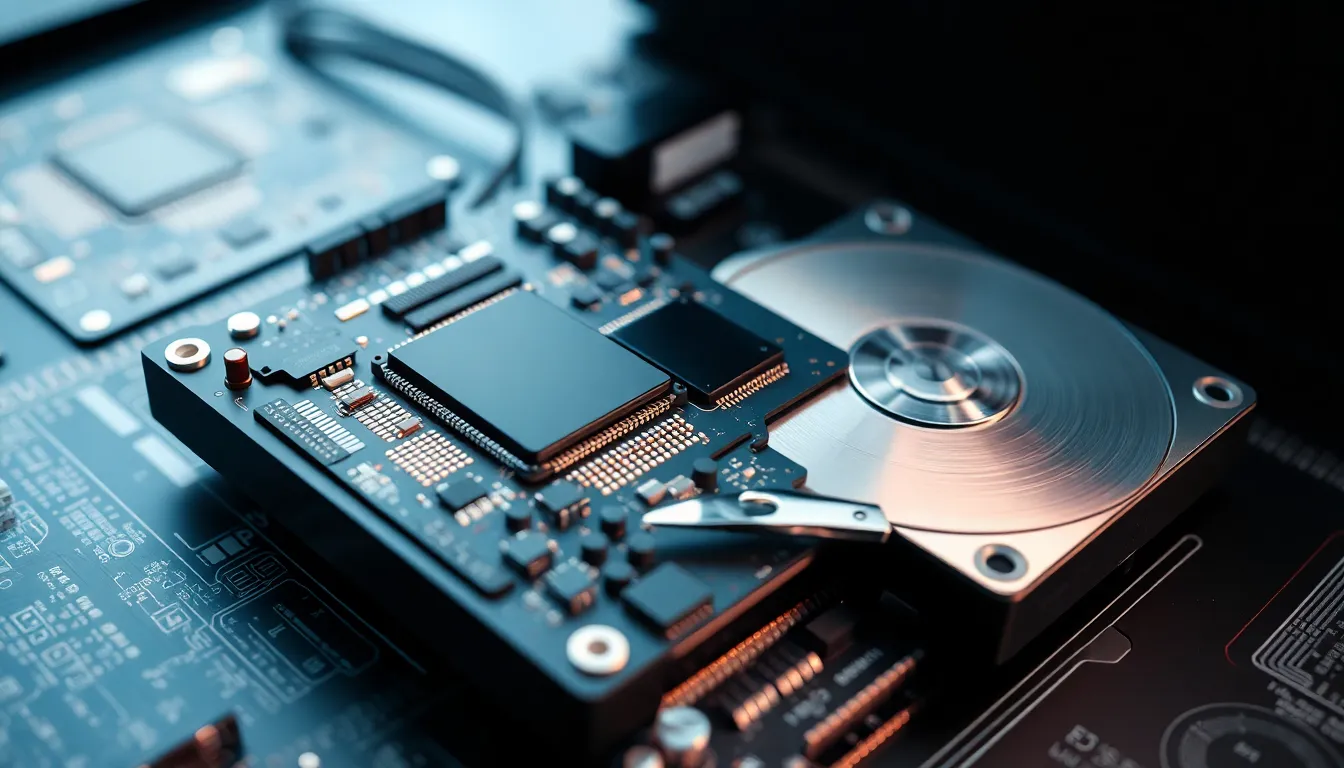
In a world buzzing with talk about quantum supremacy and AI overlords, it’s easy to forget the unsung hero of technology: the classical computer. These trusty machines are the backbone of our digital lives, tirelessly crunching numbers, managing data, and helping us binge-watch our favorite shows without a hitch. Who knew that behind every meme and cat video lies a complex network of transistors and circuits?
Classical computers may not have the flashy allure of their quantum counterparts, but they’ve mastered the art of reliability and efficiency. They’re the dependable friends who show up on time, ready to tackle any task thrown their way. So, whether you’re coding the next big app or simply trying to find a decent recipe online, classical computers are here to save the day—one byte at a time.
Classical computers serve as the foundational technology for digital operations. They utilize binary data representation, processing information in bits, which can exist in either zero or one states. Most classical systems rely on hardware components like CPUs, RAM, and storage devices, forming the core of computing performance.
These systems excel in executing algorithms and performing calculations, making them indispensable for numerous applications. Various fields, including business, education, and entertainment, depend on classical computers for tasks like data processing, software development, and content delivery. Their architecture allows for a wide range of operating systems, from Windows to Linux, catering to diverse user needs.
Data shows that classical computers efficiently manage everyday activities, unlike their quantum counterparts. Users often experience quick response times when running applications, browsing the internet, or engaging in online gaming. Furthermore, classical computers handle large databases, enabling businesses to analyze trends and make informed decisions.
Reliability ranks high among classical computers’ features. They deliver consistent performance in critical environments, such as hospitals and financial institutions. Engineers often design these systems for durability, ensuring they last for years with proper maintenance.
While discussions frequently center on emerging technologies, classical computers remain vital. Their efficiency in managing both mundane and complex tasks secures their place in the technology landscape. Current advancements in parallel processing and multicore architectures demonstrate their adaptability to increasing workloads.
Key Components of Classical Computers
Classical computers consist of several crucial components that work together to facilitate various tasks efficiently.
Central Processing Unit (CPU)
The CPU acts as the brain of a classical computer, executing instructions and performing calculations. It processes data through arithmetic and logical operations, significantly influencing overall performance. Different CPUs offer varying clock speeds, measured in gigahertz (GHz), which determine how many instructions it can handle per second. Core count also plays a vital role; more cores facilitate parallel processing, enhancing multitasking capabilities. Manufacturers like Intel and AMD dominate the market, providing a range of options for different computing needs. As a result, selecting an appropriate CPU directly impacts the speed and efficiency of applications run on the system.
Memory and Storage
Memory and storage components are essential for data management in classical computers. Random Access Memory (RAM) provides temporary storage for active tasks, allowing quick access and fast processing. Typically, 8GB to 32GB of RAM suffices for most users, while demanding applications, like gaming or video editing, may require even more. In terms of storage, Hard Disk Drives (HDDs) and Solid State Drives (SSDs) serve as primary options. HDDs generally offer larger capacity at a lower cost, while SSDs deliver faster data retrieval times and improved overall performance. Balancing memory and storage capabilities enables users to optimize their systems for speed and efficiency in daily operations.
Types of Classical Computers
Classical computers come in various forms, each designed for specific tasks and user needs. The two main types are personal computers and mainframe computers, both essential for different environments.
Personal Computers
Personal computers, or PCs, are widely used in home and office settings. They cater to individual users, offering functionality for tasks such as document processing, web browsing, and gaming. Components like CPUs, RAM, and storage greatly influence performance, contributing to fast operation and multitasking. PCs typically include desktops and laptops. Each form factor provides distinct benefits: desktops often deliver higher power, while laptops emphasize portability. Data shows millions of personal computers are in use globally, illustrating their crucial role in everyday life.
Mainframe Computers
Mainframe computers excel in handling vast amounts of data and performing numerous simultaneous transactions. Organizations such as banks and government agencies rely on them for mission-critical tasks. These systems prioritize reliability and processing power, capable of managing hundreds of thousands of transactions per second. Mainframes often feature extensive data storage options and robust network capabilities. Performance is influenced by factors like CPU architecture and memory configuration. Data indicates that mainframes continue to dominate processing tasks within industries that require high availability and security.
Historical Development of Classical Computers
Classical computers have evolved through distinct phases, reflecting advancements in technology and changing needs.
Early Computing Devices
The origins of classical computing trace back to devices like the abacus and mechanical calculators in the early centuries. These early machines simplified numerical tasks, laying the groundwork for more complex computations. In the 19th century, Charles Babbage designed the Analytical Engine, often regarded as the first programmable computer. This innovation introduced concepts like an arithmetic logic unit and conditional branching. Ada Lovelace, recognized as the first computer programmer, envisioned algorithms for the Analytical Engine, demonstrating early potential for programming.
Evolution Through the Decades
The 20th century marked a pivotal era in computer development. The introduction of vacuum tubes enabled the first generation of computers, such as ENIAC, to perform calculations at unprecedented speeds. By the 1950s, transistors replaced vacuum tubes, leading to smaller and more reliable machines. This advancement fueled the growth of second-generation computers, which increased efficiency and decreased costs. In the 1970s, microprocessors emerged, allowing entire processing units to fit on small chips, paving the way for personal computers. The progression from mainframes to PCs empowered individuals, making computing accessible to a broader audience. Throughout these decades, each technical advancement contributed significantly to the capabilities and applications of classical computers.
Advantages and Limitations of Classical Computers
Classical computers offer significant strengths and present certain limitations. Understanding both aspects is crucial for leveraging this technology effectively.
Performance and Efficiency
Performance defines classical computers. They execute tasks quickly, with average response times of milliseconds in applications and online browsing. Efficiency often comes from reliable hardware. Systems equipped with multi-core CPUs can handle simultaneous tasks effectively. RAM capacity directly influences the ability to run multiple applications without lag, enhancing user experience. In critical settings like hospitals, reliability ensures that data processing conforms to strict operational requirements. Most classical computers can maintain consistent performance even under heavy workloads, supporting various business functions.
Constraints in Processing Power
Processing power represents a notable limitation of classical computers. They rely on binary computations, and scaling beyond certain thresholds becomes complex. Even high-performing CPUs may struggle with extensive parallel processing that emerging technologies like quantum computing can handle more adeptly. Memory bandwidth can limit data transfer speeds, affecting overall system performance. Additional constraints include heat generation and energy consumption, which reduce efficiency under heavy use. Classical computers excel at many tasks but face challenges as computational demands evolve.
Future of Classical Computers
Classical computers continue to play a significant role in shaping the future of technology. Innovations in computing technology indicate a steady improvement in their performance and efficiency. Upgrades in processing power from multi-core architectures enhance the execution of tasks, enabling classical computers to manage increasing workloads effectively.
Emerging trends show that hybrid systems may become more common, integrating classical and quantum computing capabilities. This integration allows classical computers to handle everyday tasks while quantum systems tackle complex problems such as optimization and simulation. Organizations are exploring how this collaboration can enhance data processing.
Advancements in artificial intelligence and machine learning also contribute to the evolution of classical computers. These advancements allow for better data analysis and improved automation across various sectors. Businesses can utilize classical computers to derive actionable insights from vast datasets, helping them stay competitive in rapidly changing markets.
Investments in energy-efficient hardware are forecasted to reduce power consumption and heat generation in classical systems. Reducing energy usage not only lowers operational costs but also addresses environmental concerns.
Security will remain a primary focus as classical computers evolve. Implementing robust encryption methods ensures data protection, enhancing trust in digital operations. Organizations prioritize strong security measures to maintain operational integrity.
Collaboration among technology developers, researchers, and industry leaders will drive the future landscape of classical computers. Continuous dialogue and innovation lead to enhancements in usage, forming a robust foundation for a digitally driven world.
Conclusion
Classical computers remain indispensable in today’s tech landscape. Their reliability and efficiency make them the backbone of countless everyday tasks. While newer technologies capture attention, classical systems continue to excel in data management and processing power.
As advancements unfold, classical computers are expected to evolve alongside emerging technologies. The integration of hybrid systems may enhance their capabilities while maintaining their essential role in daily operations.
Ultimately, the enduring relevance of classical computers highlights their critical place in a rapidly changing digital world.